
Today marks 100 years since nature conservation in Ukraine first became part of state policy.
Although Ukrainian scientists had been advocating for the official recognition of nature conservation since 1918, it was not until 16 June 1926 that the All-Ukrainian Central Executive Committee and the Council of People’s Commissars of the Ukrainian SSR adopted the “Regulation on Cultural and Natural Monuments” — the first legislative act in Ukraine dedicated to nature conservation.
At that time, nature conservation primarily focused on protecting the most valuable natural areas through the establishment of nature reserves and natural monuments. This document established the legal procedure for creating protected areas and laid the foundations of a system whose core principles have, in part, survived to the present day.
To assist the People’s Commissariat of Education of the Ukrainian SSR, the Ukrainian Committee for the Protection of Natural Monuments (UCPNM) was established as an advisory body that became the driving force behind the development of protected areas in Ukraine.
UCPNM was a unique institution. Although formally a public association of natural scientists, it assumed responsibility for identifying valuable sites, preparing scientific justifications, and establishing protected areas. Its members included scientists, university lecturers, school teachers, reserve staff, as well as hunters and anglers. Membership in UCPNM was considered both prestigious and honorary.
The years 1926–1932 became the most productive period in the history of nature conservation in Ukraine. During this time, more than 600 protected areas were established. Among the most remarkable were the Coastal Nature Reserves, which stretched almost continuously from the Kinburn Spit to Kryva Kosa on the coast of the Sea of Azov. Today, the territory of this former protected complex includes seven national nature parks and the Black Sea Biosphere Reserve.
It is remarkable that perceptions of Ukraine’s most valuable natural areas have changed very little over the past century. Most of the places that conservationists considered priorities one hundred years ago remain conservation priorities today.
The scale of the work accomplished is equally impressive. In practice, the entire protected area system of Ukraine relied on just four regional inspectors of UCPNM, who served on a voluntary basis while combining conservation work with their primary positions at universities and scientific institutions.
Public outreach was no less important. The committee worked actively with local communities, promoted knowledge about Ukraine’s natural heritage, and fostered respect for the need to protect it.
Among the members of UCPNM were outstanding Ukrainian scientists, including Volodymyr Vernadsky, Oleksandr Marzieiev, Mykola Kholodny, Heorhii Vysotskyi, and many others.
Unfortunately, UCPNM’s successful work was brought to an end by Soviet repression. Beginning in 1932, the committee became a target of the totalitarian regime. Many of its members were persecuted, while others were executed or died in labour camps.
In 1934, UCPNM was formally dissolved, and the “Regulation on Cultural and Natural Monuments” was repealed. Much of the conservation system that had been created was dismantled, forcing the next generation of conservationists to rebuild Ukraine’s protected area network almost from scratch.
Nevertheless, some of the ideas proposed a century ago remain relevant today. Among them are the establishment of the Chornyi Lis and Irdynskyi National Nature Parks. Our organization is currently working to bring these long-standing plans to fruition and continue the work begun by our predecessors.
Of particular importance is the fact that on 10 June 2026, the Cabinet of Ministers of Ukraine approved the draft Presidential Decree on the establishment of Chornyi Lis National Nature Park. We are now awaiting its signature by the President of Ukraine.
We bow our heads in memory of those who laid the foundations of nature conservation in Ukraine one hundred years ago. Their dedication, commitment, and sacrifice gave rise to a cause that we continue today. For many of them, this work became not only a calling but also cost them their lives.
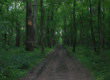
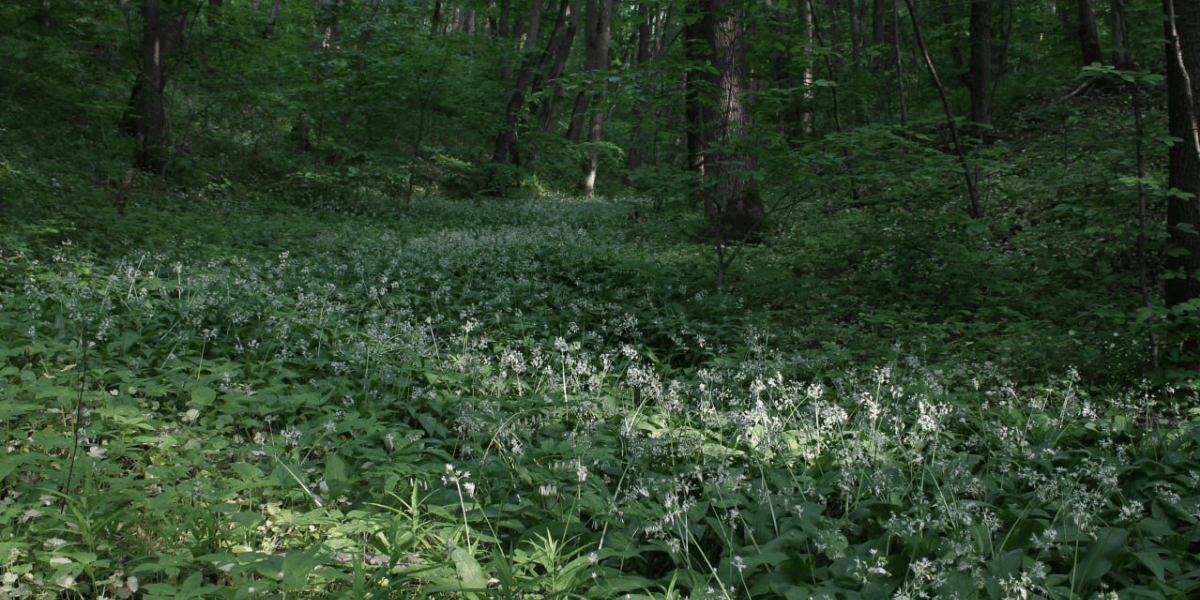
The photo shows the future Chornyi Lis National Nature Park. Photograph by Ihor Sirenko.