
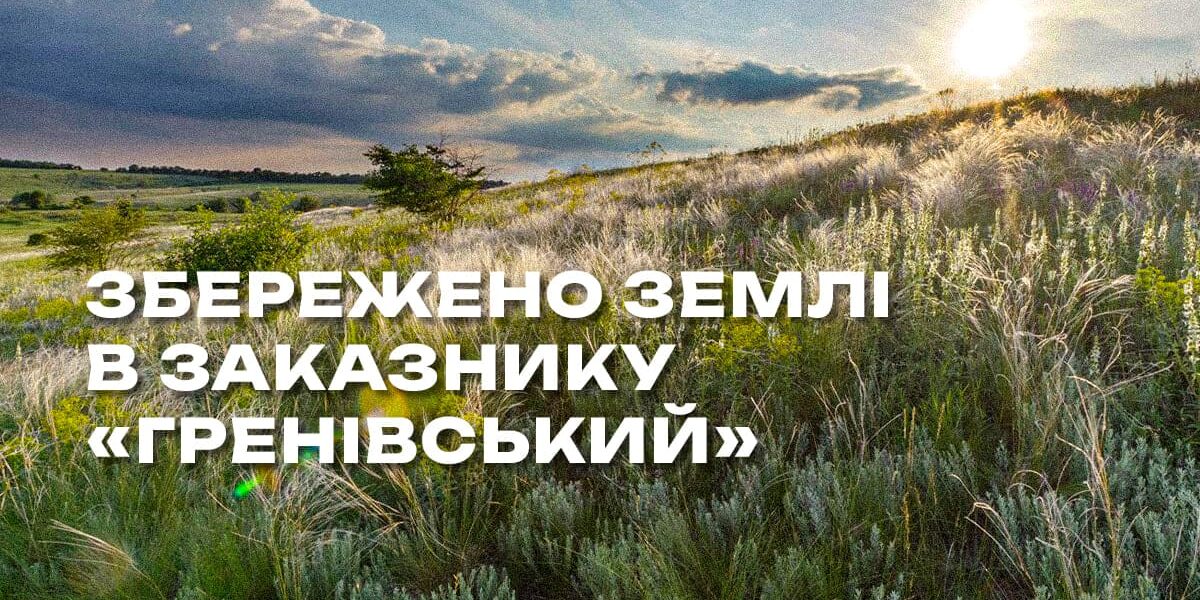
The Holovanivsk Prosecutor’s Office in the Kyrovohrad region has filed a lawsuit regarding the illegal privatization of land within the “Hrenivskyi” landscape reserve, a protected area of local significance.
We at the UNCG discovered this violation in late 2022, but the lawsuit was prepared only recently. The prosecution found that in August 2020, the Danylo-Balkivska village council had authorized and approved the privatization of a 2-hectare plot. However, this territory is located within the reserve, and it is illegal to privatize such lands.
The claims of the Holovanivsk Prosecutor’s Office—namely, the cancellation of the registration and all decisions leading to the privatization, and the return of the plot to communal ownership—were fully satisfied by the Ulyanivsk court. The value of the plot is more than 56 million hryvnias.
Based on our analysis, 13 land plots totaling about 26 hectares have been illegally privatized within the “Hrenivskyi” reserve. So, while this is a positive development, this victory returns only 1/26th of the illegally transferred land. Other lawsuits regarding the illegal transfer of land in the “Hrenivskyi” reserve are currently under court review.
The establishment of the reserve was made possible with our participation. Our expert, Doctor of Biological Sciences Anna Kuzemko, conducted a study on its behalf.
About the “Hrenivskyi” Reserve
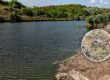
The Hrenivskyi reserve is a landscape reserve of local significance covering an area of 208.53 hectares. It is located in the Blahovishchenske district of the Kyrovohrad region, near the village of Kosharo-Oleksandrivka. The reserve was established by a decision of the Kyrovohrad Regional Council in 2011.
The reserve is located in the valley of the Southern Bug (Pivdennyi Buh) river and consists of floodplain and ravine-gully complexes with steppe and meadow vegetation. In some places, crystalline rocks are exposed at the surface. Among the species listed in the Red Data Book of Ukraine, you can find hairy-flowered milkvetch (Astragalus dasyanthus), blackening pasqueflower (Pulsatilla nigricans), and reticulate iris (Iris reticulata), as well as regionally rare species such as whole-leaved clematis (Clematis integrifolia) and dwarf iris (Iris pumila).