

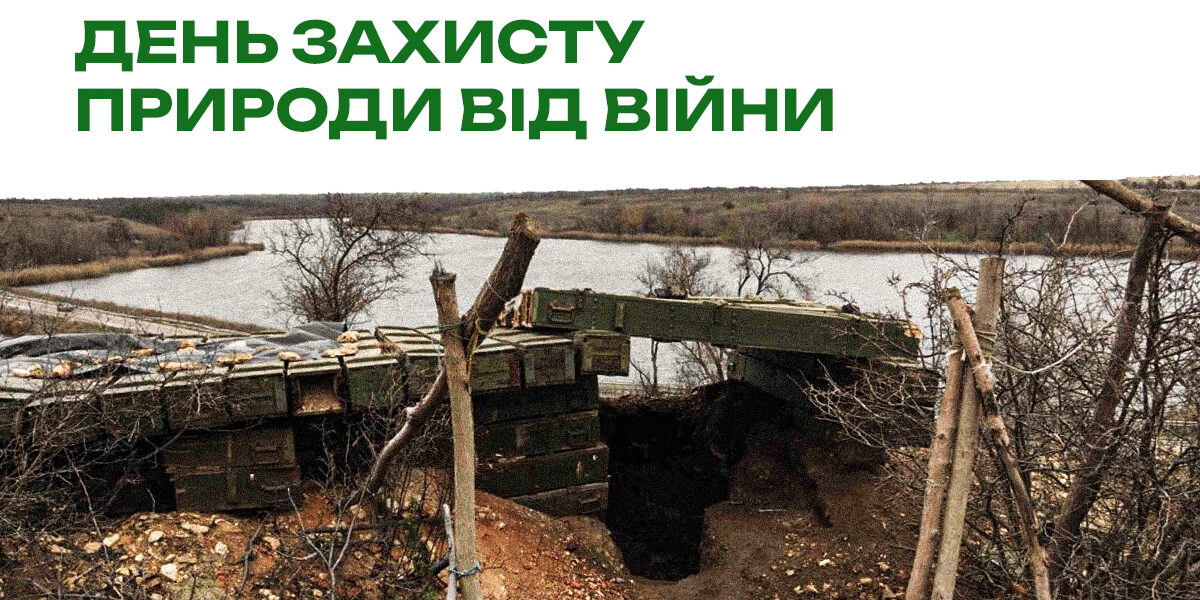
November 6th marks the International Day for Preventing the Exploitation of the Environment in War and Armed Conflict. This date was proclaimed by the UN General Assembly in 2001 to draw global attention to the consequences of wars on nature and ecosystems. The purpose of the day is to remind humanity that during military conflicts, not only people but also the natural environment become victims of destruction, loss, pollution, and long-term degradation.
With the start of the war in Ukraine, the meaning of this day has taken on a special significance for us. Ukraine’s natural ecosystems and biodiversity are suffering from hostilities and the occupation of its territories, and the long-term consequences will affect the country for decades. The conflict zone now covers a huge area of steppes, forests, rivers, nature reserves, and other protected areas that are home to many rare and endangered species.
From shelling, landmines, and occupation, Ukraine’s nature is sustaining serious damage. Today, in the east, south, and north of the country, hundreds of hectares of protected areas have been destroyed or damaged, and the habitats of many species are simply disappearing. Some of these unique ecosystems will require decades to recover, if at all possible. This makes supporting environmental initiatives and protecting natural areas during wartime extremely urgent.
Understanding “Ecocide” in the Ukrainian Context
During russia’s war in Ukraine, the term “ecocide” has become widespread, referring to “the destruction of all living things” in a given territory. Looking at the scale of shelling, the destruction of chemical plants, and the storage facilities for agrochemicals and fuel, it can be argued that russia is not only committing ecocide over vast areas of Ukraine but is also deliberately using it as a tactic to “liberate” the territory from Ukrainians.
Restoring what has been lost will take a very long time. However, preserving the remnants of surviving natural ecosystems is a task for today.
Nature reserves and national nature parks that have suffered from the war need our support now more than ever. The Ukrainian Nature Conservation Group continues its activities to protect these territories, and all charitable contributions received until the end of martial law will be used to support these institutions of the protected areas fund. Nature is our shared treasure that deserves protection even in the most difficult of times.