
This October, our colleagues successfully hosted a panel titled “Nature Conservation in Wartime: Ukraine’s Experience” at the International Union for Conservation of Nature (IUCN) Regional Forum. This was the first time that the consequences of the Russian invasion of Ukraine were discussed at the IUCN level.
Military actions have a significant and devastating impact on biodiversity. Fires caused by shelling destroy forests and grasslands, while chemical products from explosions and military wreckage contaminate soil and water bodies. Noise pollution alters animal behavior, affecting migration and breeding patterns. Valuable protected areas have been left in occupied territories and active combat zones.
For us, it is important to share this with colleagues from other countries. Accurately assessing the true scale of damage and its severity to key ecosystems, such as the Sea of Azov coast, requires both field research and satellite imagery analysis. As long as protected areas remain in combat zones or under occupation, it is difficult to determine the full extent of the ecological harm.
The potential for “spontaneous” recovery of 20,000–30,000 km² will be a priority and a major challenge for nature conservation after the war. This could also open new opportunities to integrate these territories into the strategy for achieving global biodiversity targets.
One such area is the former Kakhovka Reservoir. According to our colleagues’ calculations, willows are growing here at a rate of 1 cm per day! The territory has already become a spontaneous testing ground for innovative ecological research. In the future, these 2,000 km² could become the largest nature restoration project in Europe.
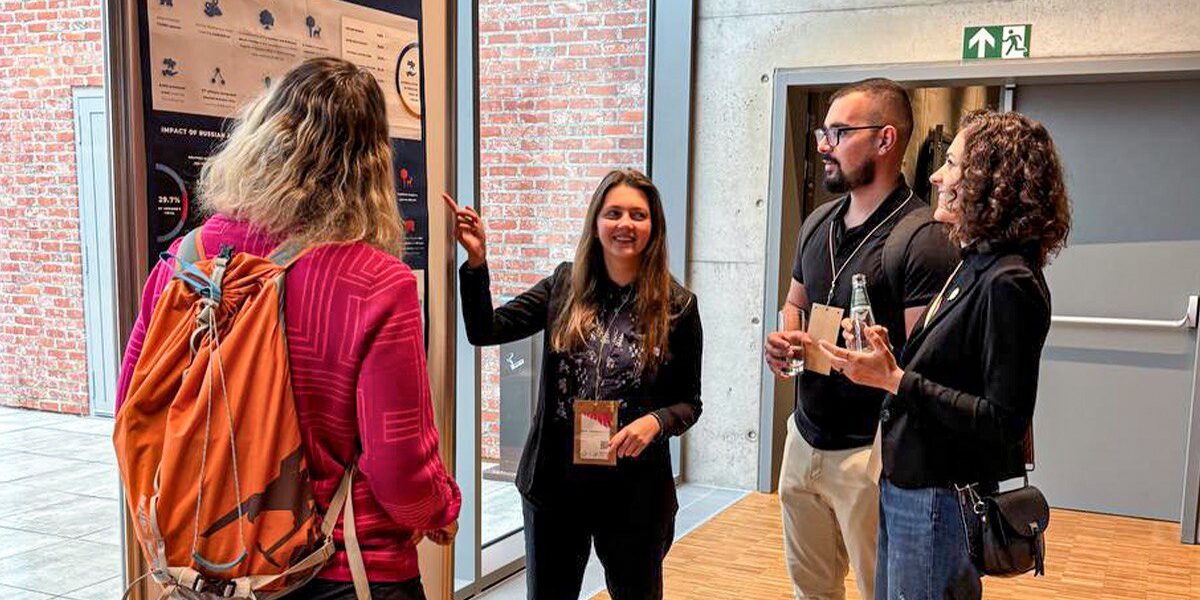
For our group, participation in the IUCN Forum was a unique and inspiring experience. Our stand and presentation, “Nature Conservation in Wartime: Ukraine’s Experience,” attracted a lot of attention. Forum participants were interested in learning about the consequences of Russian military aggression for Ukraine’s protected areas and biodiversity as a whole. This level of engagement and curiosity underscores the importance of disseminating information about the situation in Ukraine on an international level. The stand also served as a platform for deeper conversations, with visitors asking how they could get involved or collaborate.
However, the invitation and presence of IUCN members from the russian federation are outrageous. The full-scale invasion has been ongoing for three years, yet the international community still hesitates to isolate the russians. This only strengthens our resolve and highlights the importance of our work at the international level.