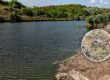

The Ministry of Environmental Protection and Natural Resources (Min dovkillia) has begun reviewing a new Environmental Impact Assessment (EIA) report concerning the raising of the Oleksandrivske Reservoir’s water level to complete the Tashlyk Pumped-Storage Hydroelectric Power Plant (Tashlytska HPP). We have submitted our objections to this Report and strongly urge the Ministry to prevent the implementation of this project.
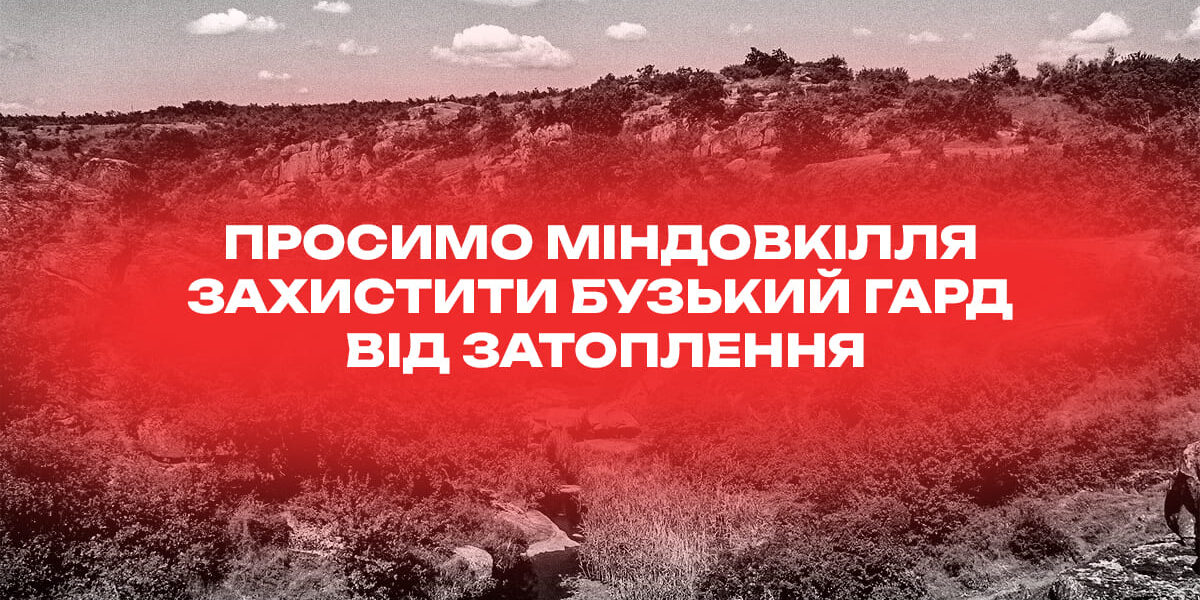
This case is a litmus test for the state’s capacity to protect its natural and cultural heritage. Buzkyi Hard is a crucial heartland of nature and Cossack history. It is part of the Granite-Steppe Pobuzhia Regional Landscape Park and is a key site within the Emerald Network of Europe. It is the only place where several unique, globally rare plant species occur. The previous intent to raise the reservoir’s level already resulted in a case being opened against Ukraine before the Standing Committee of the Bern Convention.
Our analysis of the EIA Report indicates a series of critical issues, spanning fundamental questions of the project’s energy necessity, numerous ecological, technical, and legal violations, and the low quality of the report itself. A particularly critical issue is the significant, often devastating, harm to protected biodiversity and habitats that was not properly assessed.
Critical Problems with the EIA Report
Energy Inefficiency and Obsolescence
The project is based on a concept developed 45 years ago during the Soviet era, without significant adaptation to modern climate, energy, and security realities. The plant has a low efficiency coefficient (CoP), acting not as a net generator but as an extremely large consumer of electricity, which contradicts the logic of post-war energy recovery. Moreover, the global trend in developed countries is the decommissioning, not the construction, of similar hydropower facilities, especially in flat regions where their efficiency is minimal.
Manipulation of Technical and Energy Indicators
The report contains numerous contradictions regarding the technical specifications of the plant and its components. The stated energy capacities do not correspond to the project’s declared goal, as they do not increase, and various characteristics contradict each other (e.g., in Tables 1.3 and 1.4). Most of the material is chaotically borrowed from previous versions of the report, creating inconsistencies and failing to incorporate prior public comments.
Critical Reduction in Southern Bug River Flow
The report confirms the trend toward low water levels in the Southern Bug River (Pivdennyi Buh), which has already led to a failure to meet minimum sanitary flow requirements. Projected climate change further threatens a complete cessation of inflow by 2030. This raises serious doubts about the plant’s ability to function at all, let alone secure water intake for regional economic needs.
Absence or Distortion of Alternative Assessment
The report effectively lacks a genuine comparison of alternatives, such as various options for battery energy storage systems, thermal or gas accumulators, mechanical energy storage, or gas turbine installations, etc. It ignores not only technical but also territorial alternatives, failing to consider different types of power plants that could serve as maneuvering capacity. Alternatives that are demonstrably cheaper, more effective, and more environmentally sound are either not analyzed or are intentionally discredited.
Ecological Risks
The planned raising of the Oleksandrivske Reservoir’s water level will lead to the flooding of valuable conservation territories, violating the protection regime of the Protected Areas Fund (Pryrodno-Zapovidnyi Fond, PZF) and the Emerald Network. It will destroy rare biotopes and habitats of species listed in the Red Data Book, including globally unique species. This will result in widespread and massive violations of national and international legislation, and the loss of unique species cannot be assessed in monetary terms. The environmental, hydrobiological, hydrochemical, and other sections of the report contain no new data, relying on poorly organized information from other reports or even other territories, and do not address previous comments.
Risks to Cultural Heritage
Numerous archaeological sites and cultural heritage objects with active protection status are located in the flooding zone. Flooding under these circumstances would inevitably violate cultural heritage laws.
Insufficient Public Health Assessment
The section on the impact on the population is limited to statistics on illness and does not include an analysis of potential health risks. Furthermore, the proposed compensatory measures are unrelated to the planned activity and its consequences.
Legal Violations and Failure to Address Previous Refusals
Most of the comments that led to two previous refusals of the EIA report remain unaddressed. Moreover, the new report not only fails to add new research but also omits certain mandatory sections that were present in past versions, thus diminishing the document’s informativeness and violating the Law of Ukraine “On EIA” at least dozens of times.
We urge the Ministry of Environmental Protection and Natural Resources to decide to prohibit this activity or issue a Refusal of Conclusion due to the numerous and gross violations of national and international legislation.