
Today, the Ministry of Environmental Protection and Natural Resources of Ukraine (Min dovkillia) is set to review what is perhaps the most brazen Environmental Impact Assessment (EIA) report in recent history (case #10433).
Last summer, a private entrepreneur, FOP Lapko Serhiy Vasyliovych, who owns several plots of agricultural land in the Mykolaiv region, decided to extract sand from them. He submitted an EIA application. The plots are located on an undisturbed, virgin steppe slope within a ravine. There were no official records of a mineral deposit on these lands, and the State Agrarian Cadastre still lists the territory as agricultural land. Moreover, the plot is part of the Emerald Network and the Ecological Network, which provides it with a protected status.
The 2024 EIA report lacked the necessary studies, contained numerous errors, violated standards, and included inaccurate information. The Department of Ecology and Natural Resources of the Mykolaiv Regional State Administration (Mykolaivska ODA) issued a well-justified refusal. It was one of the most thorough in the history of the EIA procedure in Ukraine, listing 18 reasoned violations and providing a detailed explanation to the developers on how to properly conduct biodiversity impact studies. For this, we express our respect to the Department. The refusal was issued on November 4, 2024.
However, the entrepreneur quickly resubmitted an EIA application. A new report appeared on February 3, 2025. It was prepared during the winter (November to January), a period when it is impossible to conduct a proper biodiversity study of the steppe. The new report addressed only three of the 18 issues listed in the negative EIA conclusion. The company essentially resubmitted the same text, pretending that a biodiversity study could have been conducted during the Christmas holidays. But that’s a minor detail compared to what we discovered next.
We checked the area using a Sentinel-2 satellite image and found that between October 5 and 23, 2024, the territory had been illegally excavated. The developers of the new report even stated this directly (p. 16 of the EIA Report): they began exploratory mining to assess the deposit’s reserves without waiting for even the first favorable EIA conclusion, which was ultimately a refusal. This means that at the time of the first negative EIA conclusion, work at the site had already begun, destroying the steppe and partially the forest vegetation, for which no permission had been obtained.
Developing a deposit without a favorable EIA conclusion is a severe violation of the law. Article 15 of the Law of Ukraine “On EIA” establishes liability for this, and Article 16 provides for a temporary ban on the company’s activities, which could be grounds for a permanent ban. It also violates Article 91-5 of the Code of Administrative Offenses of Ukraine (KUoAP).
According to the materials of the first report, species from the Red Data Book of Ukraine were recorded on this territory and were likely destroyed during the excavation. This adds a violation of the Law of Ukraine “On the Red Data Book of Ukraine” to the list. The harm to the Emerald Network violates Ukraine’s obligations under the Bern Convention. And this is just part of a long list of violations.
Despite the fact that the deposit had already been excavated when the first EIA report was reviewed in 2024, the developers of the new report brazenly included a new biological survey. Furthermore, they claimed the study was conducted in the spring and autumn of 2024—even before the previous report was prepared (by completely different people).
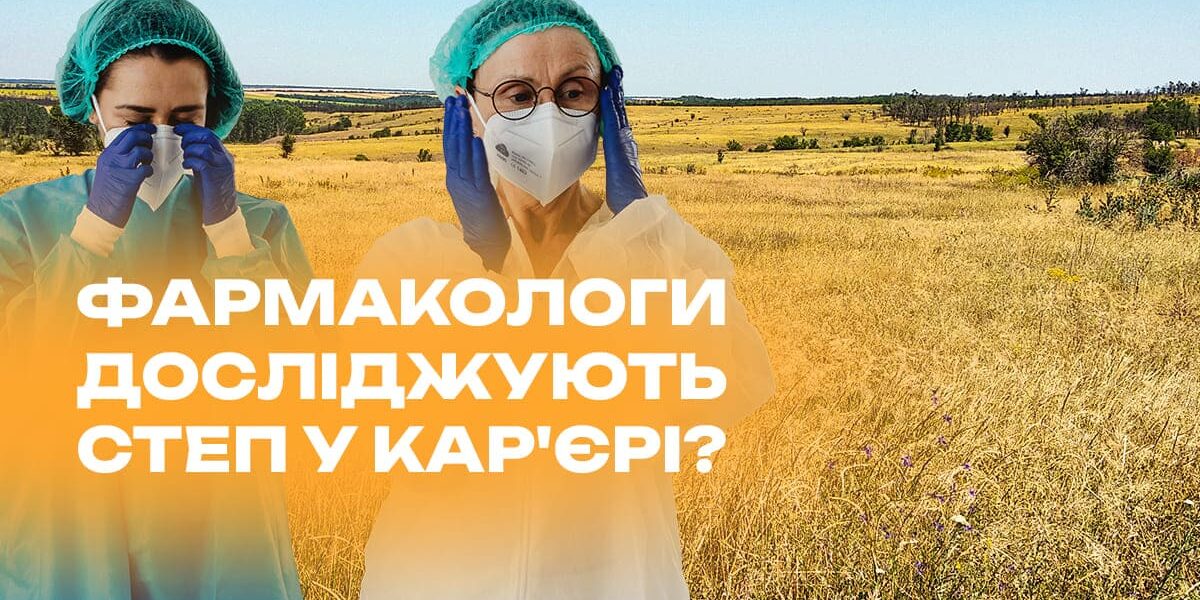
The scientists who signed this fraudulent report and claimed to have studied the biodiversity of the already excavated quarry are listed as:
- L.D. Chebotar, Associate Professor, Candidate of Biological Sciences, Department of Medical Biology and Physics, Microbiology, Histology, Physiology and Pathophysiology, Petro Mohyla Black Sea National University (ChNU).
- O.M. Larycheva, Associate Professor, Candidate of Biological Sciences, Department of Pharmacy, Pharmacology, Medical, Bioorganic and Biological Chemistry, Petro Mohyla Black Sea National University (ChNU).
- H.V. Nepieina, Head of the Laboratory of Inorganic (Medical) Chemistry.
As their specializations show, these specialists are not qualified to conduct wild nature studies.
Thus, the entrepreneur received a negative EIA conclusion, but still began mining and selling sand. Pharmacologists signed a fabricated report on biodiversity in an already excavated quarry, and the plots are still listed as agricultural land. Now Serhiy Lapko expects the Ministry of Environmental Protection and Natural Resources to approve his actions.
In the field of EIA, developers often commit violations, but this case stands out for its scale, audacity, and cynicism. For the sake of dubious personal gain, a natural steppe area, of which very little remains, was destroyed. A number of laws were grossly violated, and the requirements and recommendations of the authorized regulatory body were brazenly ignored. This is how an aggressor acts, coming in, seizing, and destroying. This is how Ukraine’s enemies on the other side of the front line act.
We have sent our comments on this EIA report and are asking the Ministry of Environmental Protection and Natural Resources to issue a clear negative conclusion. Furthermore, Serhiy Lapko does not have a positive EIA conclusion yet, but he has already destroyed a large natural area, mined, and sold minerals from highly valuable agricultural land without any legal right to do so.
Therefore, we are appealing to the Office of the Prosecutor General of Ukraine and the National Police in the Mykolaiv region to open a criminal investigation into the illegal destruction of soil cover and unauthorized extraction of mineral resources.