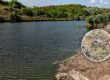

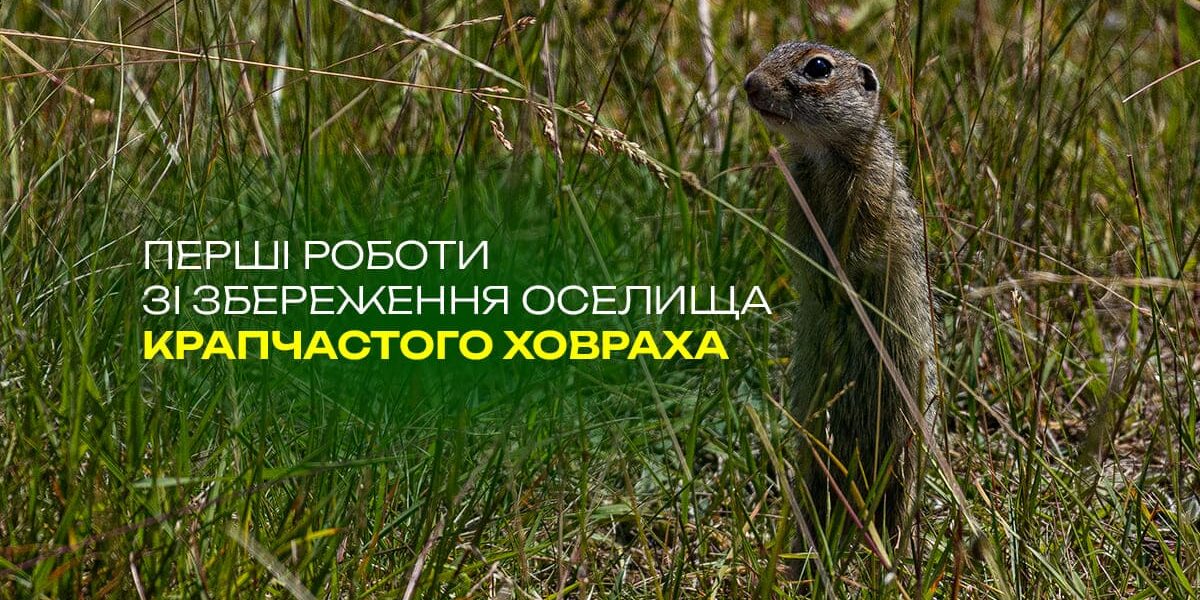
On July 4-5, 2025, near the village of Sukhovolia and the city of Brody in the Lviv region (Western Ukraine), the Ukrainian Nature Conservation Group (UNCG), along with staff from the “Northern Podillia” National Nature Park (NNP), volunteers, partner NGOs, and local residents, conducted the first phase of practical conservation work. This effort targets one of the last remaining habitats in Ukraine for the endangered Spotted Souslik (Spermophilus suslicus, or European Ground Squirrel). This species is on the brink of extinction, and its populations in Ukraine are in an extremely depressed state.
The Problem: Loss of Traditional Grazing
The Spotted Souslik is a relict steppe rodent that lives exclusively in open meadows and pastures. It cannot survive in areas that become overgrown with tall grasses, shrubs, or trees. In recent years, we have observed a rapid decline in the number of domestic livestock, and consequently, a critical decrease in grazing pressure. The loss of this traditional grazing regime is a primary threat to the species’ biotopes (habitats).
For instance, at the site near Brody, which we have been monitoring for several years, there were 5 cows and 3 horses grazing in 2024, but only 3 cows and 1 horse in 2025. Local elders recall a time not long ago when over fifty cows grazed here, and the sousliks (suslyky), as they are locally called, were common residents.
Due to the cessation of traditional grazing, the territory has begun to intensively overgrow with trees and shrubs, rapidly losing its suitability for the souslik. Field surveys estimate that only 50-60% of the tract is currently inhabited by the species. This is why we initiated a comprehensive set of habitat conservation management measures.
The Solution: Active Habitat Management
The first phase involved clearing trees and shrubs and mowing the herbaceous vegetation. Over two days of communal effort (toloka), we successfully cleared approximately 40% of the habitat area and mowed about 2 hectares of grass. Moving forward, we plan to gradually expand the clearing work across the entire area to increase the habitat capacity for the souslik and facilitate population recovery. Similar efforts, particularly regular haymaking, will be carried out on a continuous basis to maintain the site’s proper ecological status.
The organization of the event was led by the “Northern Podillia” NNP. Although this territory is not part of the national park, the management and staff showed genuine enthusiasm and full support. As the primary conservation institution in the area, they hold the necessary authority with the local population. Financial assistance was provided by the UAnimals Charitable Foundation and our private donors, ensuring we had all the necessary resources (fuel, supplies, and tools).
Over 20 volunteers participated, including park employees, residents of Brody, representatives from the NGO “Ekodiia” (Ecoaction) from Kyiv, and local residents of Sukhovolia village. All work was performed manually by the participants, and the cut hay was donated free of charge to local households that still keep livestock.
Looking Ahead
Unfortunately, active biotope maintenance is becoming an increasingly critical need for general nature conservation and the preservation of rare species in particular. This year, we also launched a project to clear and maintain steppe biotopes in the “Buzkyi Hard” NNP, and conducted the first training seminar on controlled grazing for experts and national park staff.
However, the key is not just knowing, but practicing. We consider gaining practical experience in habitat restoration to be one of the most important directions of our work, which is exactly what took place in the Lviv region recently.