
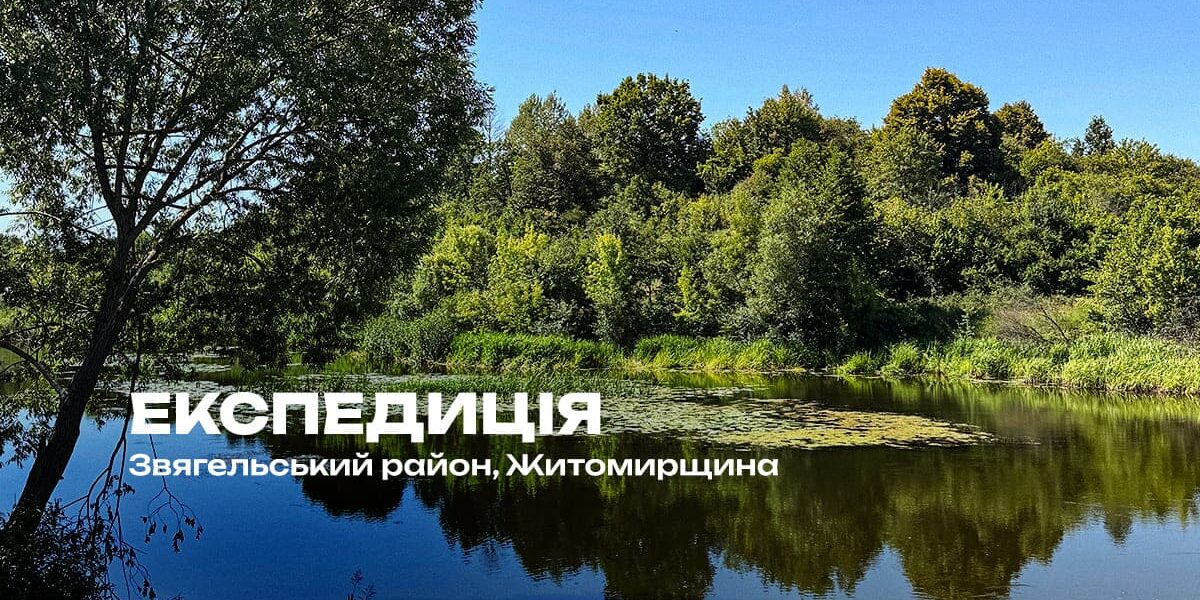
Last week, the Ukrainian Nature Conservation Group (UNCG) conducted a field expedition to the Zviahel District (formerly Novohrad-Volynskyi) in the Zhytomyr region (Zhytomyrshchyna), located in the historical and natural area of Polissia (a large, forested swampy region).
On one hand, we observed stunning natural landscapes. On the other, we concluded that if action isn’t taken immediately, this beauty will exist only in memory.
Water Resource Degradation and Fragmentation
The main threats we documented relate to the severe degradation of vital water resources:
- The Tesnivka River has long ceased to flow naturally and has been converted into a cascade of ponds (or reservoirs). Water is being diverted for the irrigation of potato fields. The river’s riparian buffer zone (the protective strip along the bank) has been plowed over, reportedly because the State Agency of Water Resources of Ukraine (Derzhvodahientstvo) does not officially classify it as a river.
- The Tnia River has not flowed for a week because a recently constructed dam completely blocked its streamflow. Someone decided that potato irrigation was more important than preserving the river as an ecosystem.
- The riparian buffer zone of the Sluch River is also being plowed, and fields are being illegally irrigated from it. The biggest threat here, however, remains the plans for the construction of two new HPPs (hydroelectric power plants), which we have previously highlighted.
This continuous fragmentation and water abstraction pose a severe threat to the hydrological regime and aquatic biodiversity of these rivers.
Threats to Ancient Forests
The ancient oak forests (vikovi dibrovy) of the Kurchytske Forestry are also under threat because not all of them currently have Protected Area Status (Zapovidnyi Status). At any moment, these valuable forests could be clear-cut, for instance, under the guise of “clear-cutting for forest regeneration” (sutsilna lisovidnovna rubka—a destructive practice often used to justify commercial logging).
We have already filed official complaints regarding the violations documented. Furthermore, we are preparing scientific and legal materials that, we hope, will help establish protective mechanisms and ensure the conservation of Zviahel District’s natural heritage.