
The Environmental Impact Assessment (EIA) is a valuable European mechanism for preventing environmental harm, but it is not a cure-all. In most cases, the EIA is conducted after a decision to proceed with a certain activity has already been made by government or local authorities. These decisions can include selling permits for subsoil use at an auction, approving logging plans, allocating funds for river clearing, or approving detailed plans for the construction of wind or hydroelectric power plants.
As a result, officials responsible for issuing EIA conclusions often face political pressure. This is because budget funds have already been allocated, or businesses have already invested money into land-use and urban planning documentation. Consequently, leadership demands a “green light” for these projects to move forward.
Therefore, identifying projects that are harmful to nature at the preliminary decision-making stages can significantly help public activists.
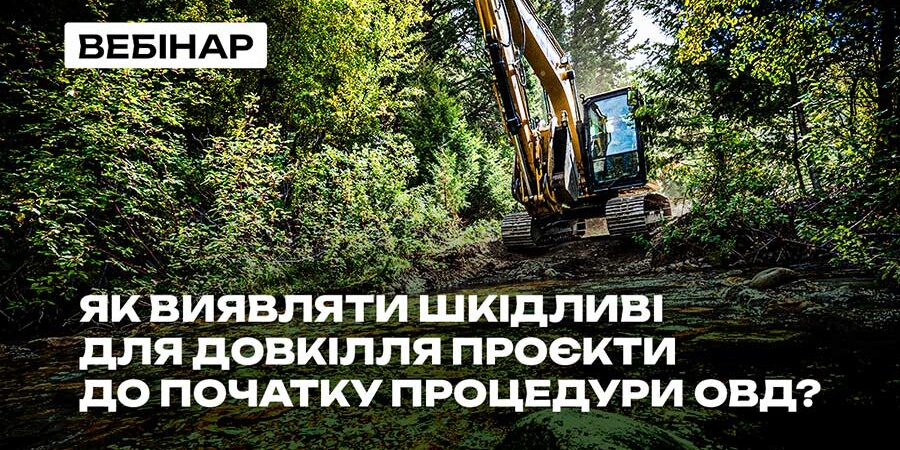
On January 9 at 6:00 PM, Petro Testov, the head of our expert department, will host a webinar. He will discuss the procedures that precede the EIA for projects involving logging, wind and hydroelectric power plant construction, river clearing, and mineral extraction. He will also explain how the public can influence these processes.