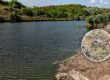


The year 2024 proved to be challenging, yet highly productive for the Ukrainian Nature Conservation Group (UNCG) across multiple fronts. Despite the ongoing full-scale war, where the state and society are understandably focused on supporting the Defense Forces, security, and survival, we never ceased our conservation work. Our daily tasks remained focused on: establishing new protected areas, defending nature against destructive projects, upholding ecological interests during Environmental Impact Assessment (EIA) procedures, and preventing mineral extraction in sensitive natural territories.
We aimed not only to preserve existing assets but also to expand the Protected Area (PA) Network, advocate for sustainable development principles, and fight attempts to destroy unique landscapes and species. At a time when nature is rapidly deteriorating daily, we must set much higher goals than before the full-scale invasion. Otherwise, the pace of conservation will be far slower than the pace of wartime destruction. Below are the main results for the year across our key operational areas.
Establishment and Expansion of the Protected Area Network
Throughout the year, we prepared and submitted 40 applications to the Ministry of Environmental Protection (MinDovkillia) and regional administrations regarding the establishment of new Protected Areas (PAs). These proposed areas cover a total of over 5,000 hectares and are based on field research across seven Oblasts (regions).
However, as is often the case, the path from initial proposal to official PA establishment takes considerable time. In 2024, 10 new PA sites were officially created based on our initiatives across five regions, totaling over 1,000 hectares. This accounts for 34% of the total area of all newly established protected sites in the country in 2024.
Among the year’s most significant results:
- Mykolaiv Oblast: Nature Reserves (zakaznyky) “Chortalski Obriyi,” “Lukianivsky,” and “Barativsky.”
- Odesa Oblast: “Chyhrynska Balka” (the largest newly created PA of the year), “Kolo Hleya,” and “Skhyly do Lunha.”
- Kyiv Oblast: Botanical Nature Reserve “Vikovy Sosnovy Lis” (Ancient Pine Forest).
- Sumy Oblast: “Urochyshche Sontsevykiv” and “Pampurivka.”
- Kirovohrad Oblast: Expansion of the Natural Monument (pamiatka pryrody) “Kaskady” (Cascades).
Overview of Ukraine’s Protected Area Management
Despite our proactive efforts, the overall development of the Nature Reserve Fund (PZF) – Ukraine’s national PA network – in 2024 was the worst in the last decade. Ukraine established only 88 new PAs, covering approximately 2,937 ha in total. This is a meager amount when measured against Ukraine’s commitments to the European Union (EU): the country is obliged to increase its total protected area coverage to 30% by 2030 (currently only 7%). What Ukraine achieved this year represents only 0.021% of the area needed to reach the 30% goal.
Many regions failed to declare any new territories, even where conditions are favorable. Furthermore, we often observed negative trends, such as the withdrawal or reduction of the boundaries of existing PAs. Therefore, we insist that decisions regarding the creation and expansion of PAs cannot be postponed. This is the only path to effective biodiversity conservation and the fulfillment of Ukraine’s international obligations.
Biodiversity Data Collection
Without accurate data on rare species populations, it is impossible to either establish a new nature reserve or adequately justify the protection of a territory from harmful development. For this reason, we constantly conduct field expeditions to collect biodiversity information. In 2025, we continued our crucial work of publishing biodiversity data to the global repository, GBIF (Global Biodiversity Information Facility). This task has gained particular importance amidst the war: when Russians purposefully destroy libraries, museums, and scientific institutions, rescuing existing archival data is as vital as collecting new information. Preserving and providing open access to these materials not only secures the results of many years of scientific work but also forms the basis for future research into the environmental consequences of the war in Ukraine.
Throughout the year, by combining new expeditionary data collection and the rescuing of archival records, we published 89 datasets, including 249,564 scientifically validated records of plants, animals, and fungi on GBIF. An additional 45,000 observations were placed on the iNaturalist platform. A significant portion of this data concerns species listed in conservation registers and territories that have suffered from hostilities.
Environmental Impact Assessment (EIA) Advocacy
Our department specializing in EIA reports was operating at full capacity in 2024. We reviewed over 2,000 documents within 1,439 EIA procedures (known in Ukraine as OVD) – a painstaking review of hundreds of thousands of pages.
As a result, we submitted proposals for 110 cases posing a danger to natural ecosystems and threatening undeniable violations of environmental law. We provided detailed expert comments on 60 of the most dangerous projects. In total, we drafted 495 pages of detailed justification, ranging from 8-page documents to extensive analytical commentaries of up to 14 pages each.
Our Achievements in EIA Advocacy:
- 19 cases – Complete Victory: Activities were prohibited, cases were closed, or sent for repeat procedures.
- 24 cases – Partial Victory: Our demands were partially met, but sufficiently to limit the most harmful activities.
- Only 12 cases were ignored by the responsible state bodies, which prioritized business demands despite the real threat to nature.
Most often, we succeeded in stopping or limiting projects involving the extraction of sand, granite, amber, and peat, as well as interventions in river ecosystems, hydropower projects, and forest destruction. Overall, the effectiveness of our work exceeded 50% – meaning we were able to protect nature in more than half of the cases we focused on.
Protecting Natural Areas from Subsoil Use and Mining
Another critical area of our activity in 2024 was counteracting harmful subsoil use and mineral resource extraction projects. We systematically analyze areas of subsoil use that the State Service of Geology and Subsoil (Derzhheonadra) plans to put up for auction, submitting our objections when extraction threatens nature.
Over the year, we reviewed 73 such sites. In 42 cases, the Ministry of Environmental Protection (MinDovkillia) agreed with our arguments and refused to put the site up for tender. This action alone saved thousands of hectares of forests, wetlands, and river floodplains. Examples include the saved Stubla River floodplain in Rivne Oblast and the rejection of proposed projects near the Nobelsky National Nature Park and the Rivne Nature Reserve.
However, a loophole exists: areas where geological exploration was conducted during the Soviet era can be put up for auction without the approval of MinDovkillia. This is precisely how, in 2024, permits were sold for extraction in areas that later became public scandals – such as Buscha, Makove Boloto (Makove Bog), and Starovyzhivsky Reserve. Fortunately, some of these decisions were challenged in court or mitigated by creating new protected areas. A new procedure for granting subsoil use permits is currently being developed, incorporating our proposals, which could significantly reduce harm to nature in the future.
Despite the complex wartime conditions and limited capacity, in 2024, we managed to preserve over a thousand hectares of nature by establishing new PAs, stop dozens of harmful projects through the EIA procedure, and secure dozens of valuable sites from mining.
However, the pace of conservation in Ukraine remains critically slow. We urge the government and society not to delay the creation of new protected areas and the strengthening of ecological standards. These tasks are an integral part of Ukraine’s commitments on the path to European Union (EU) membership, which is directly linked to the survival and strengthening of Ukrainian statehood.
We are deeply grateful to the Armed Forces of Ukraine for enabling us to live and operate in a free country and continue our work to preserve its nature!