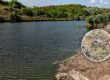


In the Cherkasy region, we recently documented a site containing a rare plant species for the area: the roof iris (Gladiolus imbricatus), a relative of the gladiolus. Just a few months later, however, we discovered that the habitat had been plowed over by agricultural companies.
At the time of plowing, the land with this Red Data Book species was leased by two companies: Agro-UBD-Cherkasy LLC and NPF “Urozhay” LLC. The latter belongs to the MHP agricultural holding group.
On its website, MHP assures the public that it cares for the environment, strictly adheres to the principles of “sustainable development,” and assesses the environmental impact of its activities. As this incident shows, the reality is different.
In truth, before leasing the land, the agricultural companies could have invited scientists to conduct a survey, which would have identified any protected species. This isn’t an unusual practice; it’s a procedure mandated by law to determine whether a territory needs to be protected.
Although the law prohibits the destruction of species listed in the Red Data Book of Ukraine and provides for severe penalties, it is now nearly impossible to prove a violation. The discovery of the species was recorded in biodiversity databases, but will that be enough evidence in court?
There are ways to prevent such cases of environmental destruction:
- For businesses: Do not plow natural territories.
- For the public: Submit proposals for the establishment of protected zones to preserve rare plants—this is extremely important.