
We have completed an initiative that successfully preserved invaluable biological data from territories significantly affected by the full-scale war. This involved tens of thousands of wildlife observations recorded by specialists from Ukraine’s Protected Areas Fund (Pryrodno-Zapovidnyi Fond, PZF) before the invasion.
Project Scope and Methodology
The project engaged 12 researchers – currently either internally displaced persons or scientists whose institutions are located in occupied or war-destroyed territories. These experts managed to salvage their field diaries, photo archives, collection records, and databases on the distribution of living organisms, which constitute a unique part of Ukraine’s scientific heritage.
All rescued materials were processed, standardized into the international Darwin Core format, and published for open access via the Global Biodiversity Information Facility (GBIF), making them available to the worldwide scientific community.
A Critical Data Set for War Impact Analysis
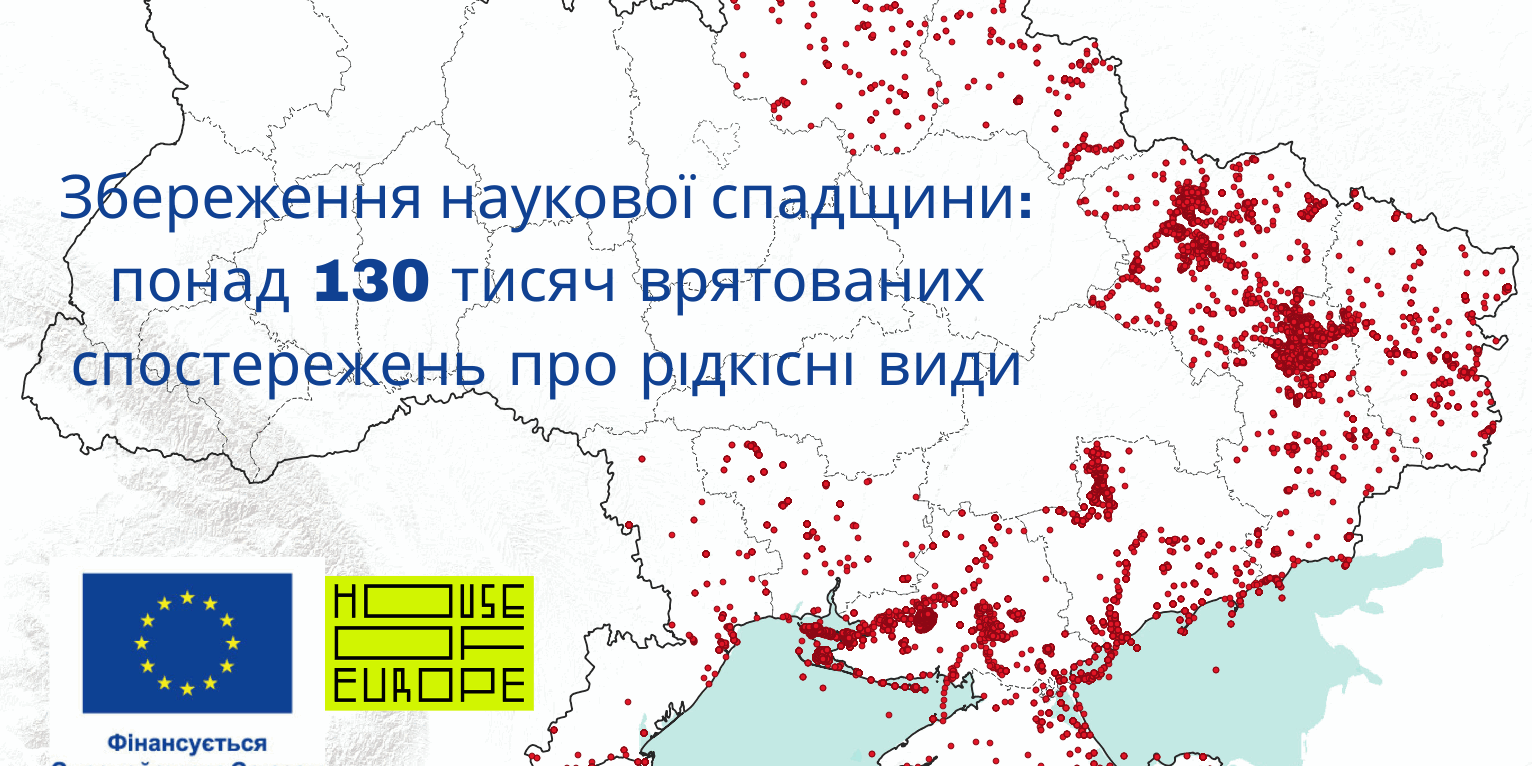
As a result, 131,000 documented observations of plants, animals, fungi, and other organisms have been added to the open scientific domain.
- The majority of these records concern species protected at the national or international level, as well as sites within the Protected Areas Fund.
- This represents the largest array of biota data published to date from the territories impacted by the war—a priceless resource for analyzing the consequences of the armed conflict on wild nature.
The collected data span 11 administrative regions and the marine area, with the highest volumes coming from regions heavily impacted by fighting or occupation:
Region/Area Number of Records
Kherson Region 39,437
Kharkiv Region 27,067
Zaporizhzhia Region 11,694
Donetsk Region 13,321
Luhansk Region 10,347
Mykolaiv Region 1,142
Chernihiv Region 1,530
Sumy Region 964
Odesa Region 734
Autonomous Republic of Crimea 2,506
Marine Area 22,309
The rescued data cover all kingdoms of life, including:
- Animals (Animalia): 90,566 records
- Plants (Plantae): 37,562 records
- Fungi (Fungi): 2,607 records
Significance Beyond Data Rescue
The importance of this work extends far beyond preserving archives:
- Saving Scientific Heritage: It directly safeguards the legacy of Ukrainian biological science.
- Supporting Specialists: It provides financial and professional support to experts who lost their jobs, laboratories, and collections due to the war.
- Setting an Example: Following the project’s implementation, a number of other Ukrainian experts have also begun processing and publishing their biological data, demonstrating resilience and commitment. The fact that Ukraine is preserving its scientific potential even in the most challenging times proves that the enemy is failing to achieve its goals.
The rescued data is now freely available to scientists, conservationists, and policymakers worldwide. This forms a vital foundation for assessing the war’s impact on Ukraine’s biodiversity and planning future conservation efforts.
All datasets published under this initiative are available via a single link [LINK HERE].
The project was implemented with the support of the House of Europe program (2024–2025), funded by the European Union and House of Europe.