
Strategic Environmental Assessment (SEA) procedures are currently underway for allocating land for Wind Power Plant (WPP) construction on other high-altitude ridges of the Carpathian Mountains. The Apetzka Polonyna, Krasna Polonyna, and Svyidovets Massif are all under severe threat.
Following the SEA phase, the next step will be the Environmental Impact Assessment (EIA) procedure. We urgently call on scientists and experts not to participate in these procedures on behalf of the project proponents (developers/investors).
Why Participating Will Not Save Nature
Your participation, even if guided by good intentions, will unfortunately result in the destruction of the Carpathian environment and effectively lend legitimacy to illegal construction and the harassment of activists. The investors do not seek your genuine conclusions; they seek the mere fact of your participation to validate their flawed reports.
Regardless of what conservation measures you might recommend, the final EIA report will inevitably support the construction, and your name is guaranteed to be cited within it. Regrettably, many reputable specialists have already fallen into this trap and added participation in the destruction of wild nature to their professional biographies.
There are no conditions under which the construction of wind farms on these high-altitude ridges is acceptable from a nature conservation perspective.
- This construction represents the irreversible conversion of natural territories into an industrial zone. By agreeing to be an expert in the EIA or SEA process for the developer, you are knowingly becoming an expert for a report aimed at destroying high-altitude meadows (polonynas) and clear-cutting forests to build access roads.
Lessons from Runa Polonyna
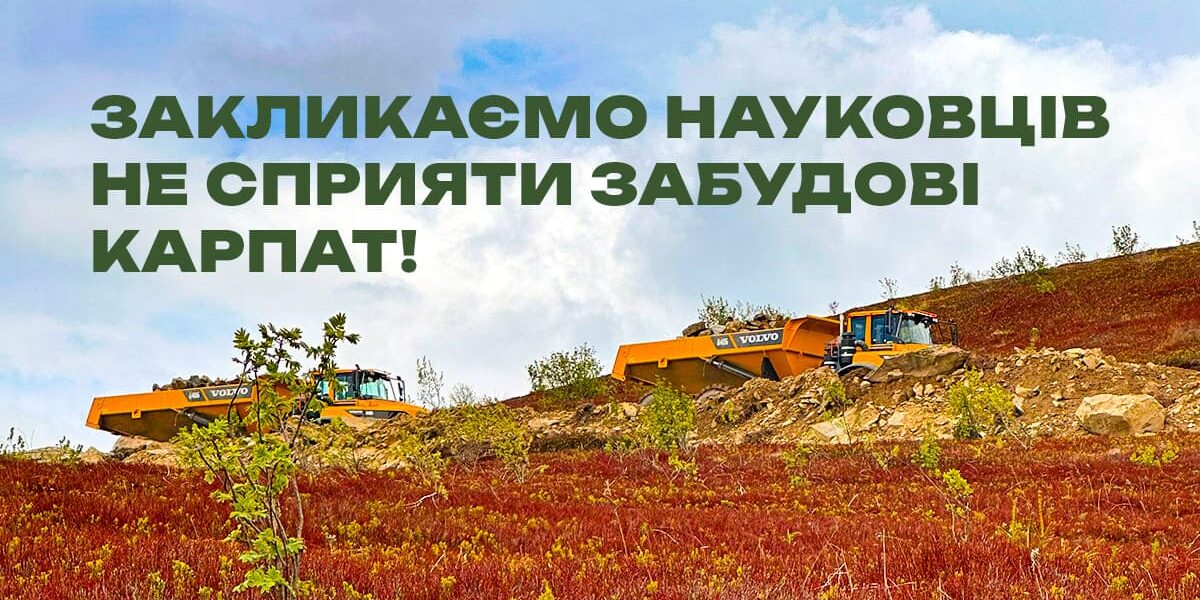
The ongoing construction on the Runa Polonyna (where illegal WPP foundations were poured) clearly demonstrates that the developer is not interested in complying with even the recommendations provided by the scientists who authored their EIA report.
- The initial report listed specific measures required to minimize harm during road construction and foundation pouring. However, all this activity began without the mandatory EIA Conclusion/Decision being finalized. The environmental recommendations remained nothing more than ink on paper.
Furthermore, the development of Runa Polonyna is being accompanied by a campaign of pressure and intimidation against the activists and conservationists who advocate for the preservation of the Carpathians. This includes lawsuits and smear campaigns involving commissioned publications on discredited internet resources and fake social media pages.
Once again, the names of the scientists who contributed to the EIA are being used as arguments in these court cases in favor of the construction developer.
Under these circumstances, the best strategy for scientists who value their reputation and integrity is to boycott participation in these destructive EIA processes, which are clearly aimed solely at facilitating the irreversible degradation of the unique natural environment of the Carpathians.